Roadway Safety: Safer Roads Start with Shared Responsibility
For roadway construction and utility crews, shared responsibility is part of daily operations. Work zones introduce changing conditions for drivers, pedestrians and workers. Lanes shift. Speeds change. Crews operate near live traffic. Drivers must process new information quickly. When distraction, speed or confusion enter that environment, the margin for error narrows.
“Roadway safety is a shared responsibility,” says Ryan Dobbins, vice president of environmental, health and safety at AWP Safety. “Infrastructure companies, traffic control partners, fleet operators, drivers and pedestrians all influence risk. The safest outcomes happen when each group understands its role and acts with consistency.”
Key Takeaways
- Roadway safety depends on shared responsibility among infrastructure companies, traffic control partners, fleets, drivers and pedestrians.
- Strong safety cultures help crews identify hazards, communicate clearly and respond to changing work zone conditions.
- Data and technology can help organizations recognize risk earlier, strengthen coaching and make better operational decisions.
- Drivers and pedestrians can help protect workers and the public by staying alert, slowing down, following signs and avoiding distractions
Building Safety Before Work Begins
Safer roads begin before the first cone is placed. For infrastructure and traffic control teams, planning is one of the most effective ways to reduce risk.
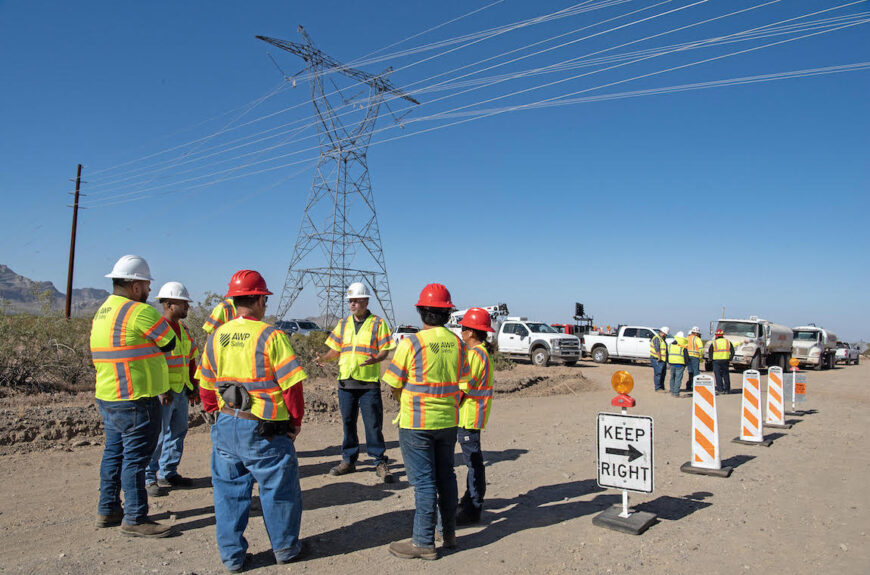
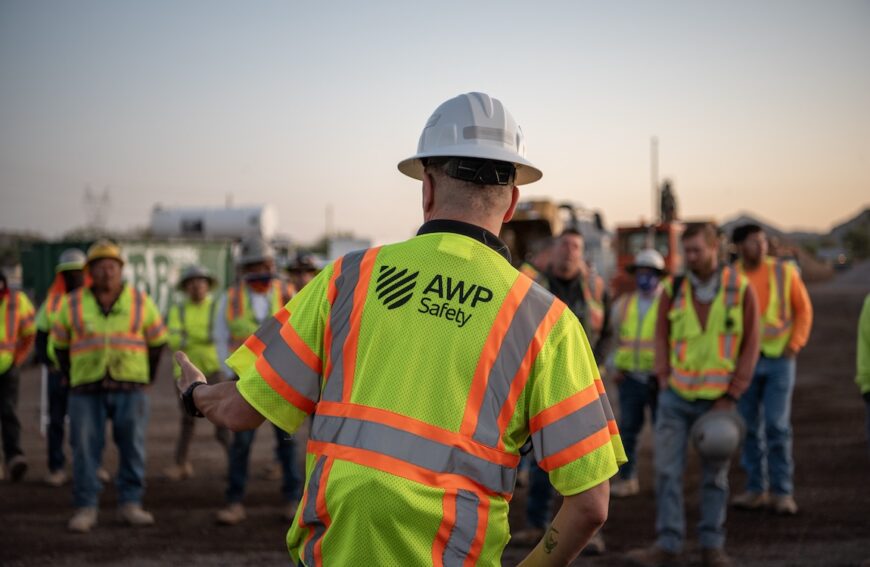
At AWP Safety, that planning includes building work zones correctly, conducting pre-job safety briefings, wearing proper PPE and assigning qualified observers when workers may be focused on tasks near active traffic. These practices help crews understand the job scope, identify hazards and prepare for conditions that may change throughout the day.
Strong safety cultures also encourage open reporting. Near misses and good catches give leaders a clearer view of potential risk before an incident occurs. When employees are encouraged to report concerns and share observations, organizations can improve training, adjust processes and prevent hazards from escalating.
“Effective road safety begins with preparation,” Dobbins says. “The more clearly teams understand the risks before work starts, the better positioned they are to make safe decisions when conditions change in the field.”
Aligning the Right Partners
Roadway safety also depends on coordination. Infrastructure work often requires multiple partners, including project owners, contractors, traffic control teams, law enforcement, technology providers and specialized safety resources.
The strongest partnerships are built on communication and shared expectations. When teams align early, they are better prepared to manage lane closures, access points, pedestrian movement, driver behavior and emergency response needs.
For traffic control partners, that alignment is especially important. Work zones must be designed and maintained in a way that gives drivers clear direction, gives crews room to work safely and supports traffic flow as conditions change.
“Safety improves when partners plan together instead of reacting separately,” Dobbins says. “Clear expectations, defined roles and consistent communication help reduce confusion for crews, drivers and pedestrians.”
Using Data & Technology to See Risk Earlier
Safety leaders need timely information to understand what is happening across jobsites, fleets and roadway environments.
Incident frequency, near-miss reports, corrective actions and employee engagement can help companies measure progress and identify where additional support is needed. Digital tools can make that process faster and more consistent by allowing teams to document hazards, upload photos and share information from the field.
Technology can also strengthen fleet and work zone safety. Camera systems can support driver coaching and help identify risky behaviors. Portable traffic monitoring tools can help teams understand speeds and traffic density. Connected devices may provide additional visibility into vehicle movement, changing conditions or high-risk areas.
But technology is only valuable when organizations act on the information it provides.
“Data should help leaders move from hindsight to prevention,” Dobbins says. “The goal is not simply to collect information. It is to identify patterns, coach more effectively, make better decisions and reduce risk before someone gets hurt.”
Helping Drivers & Pedestrians Do their Part
The traveling public plays a critical role in roadway safety, especially in and around work zones.
Distracted driving remains a serious risk for drivers of all ages and experience levels. According to the National Highway Traffic Safety Administration, distracted driving claimed 3,275 lives in 2023. NHTSA also notes that sending or reading a text takes a driver’s eyes off the road for about five seconds, which is enough time at 55 mph to travel the length of a football field.
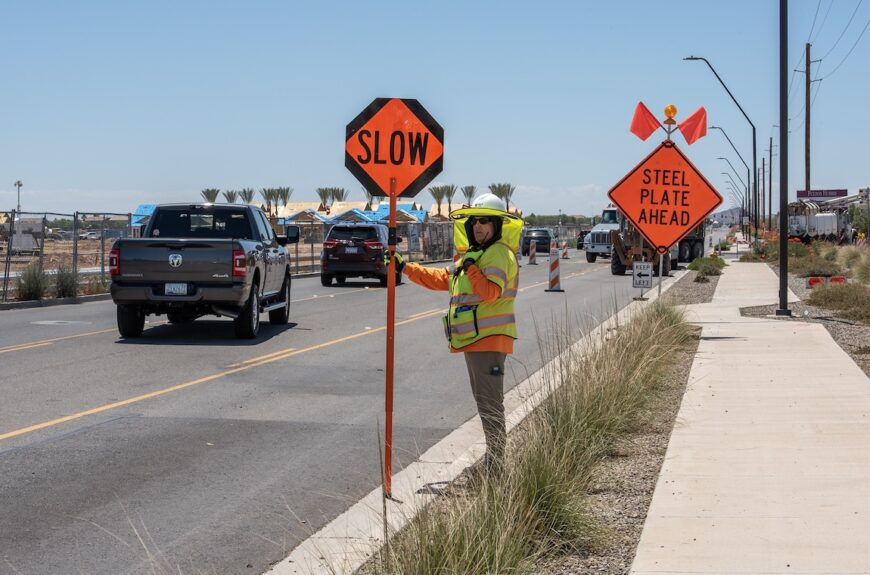
Those seconds are crucial in work zones. Drivers should slow down, follow posted signs, avoid phone use, watch for workers and give themselves extra space to react. Pedestrians should stay alert, follow marked routes and avoid entering restricted areas.
These actions may seem simple, but they are essential. Road safety improves when safe behaviors become consistent habits.
Safer Roads REquire SAfe Daily Choices
National Safety Month is an opportunity to reinforce a simple but important message: safer roads are created through daily decisions.
For infrastructure companies, that means planning work carefully, equipping crews properly, using data to identify risk and building partnerships that support safe execution. For drivers and pedestrians, it means staying alert, following direction and recognizing that work zones are active environments where conditions can change quickly.
“Every safer road begins with intentional choices,” Dobbins says. “When crews are prepared, leaders use data to manage risk and the traveling public stays focused, everyone is in a better position to get home safely.”
Learn more in AWP Safety’s article, 10 Ways Technology is Improving Construction & Roadway Safety.