10 Ways Technology is Improving Construction & Roadway Safety

Mud, noise and near-misses – construction sites are among the most active and hazardous places to work. The risks are everywhere, from heavy machinery, fickle weather and fatigued crews, to distracted drivers and tight timelines. Luck alone is never a strategy in work zones.
But new technology is giving safety leaders the chance to step in where human reflexes tap out. The tools we have at our fingertips today can see what we miss, react faster than we can, and turn a chaotic job site into a better coordinated, data-driven safety net. And the best part is many of these solutions are easier to deploy than most people think.
Take a look at 10 ways technology is changing the game and saving lives on roadways and in construction sites.
1. PPE for Communication
The hard hat has evolved beyond being merely a hard hat, and the safety vest is more than just reflective fabric. Modern personal protection equipment (PPE) can now incorporate GPS technology, proximity sensors and biometric monitors that supervise worker well-being.
Vests equipped with sensors can notify a crew member when they have entered a hazardous area, for example. Or it may inform a supervisor that a worker has remained stationary for an extended time, which could suggest a fall or a heat stress situation. These devices function as an additional set of eyes monitoring each worker, and really show their worth in large, noisy environments with limited visibility.
Some organizations are improving their efforts by utilizing fatigue-monitoring headbands, real-time location systems (RTLS) and even intelligent boots capable of detecting slips or abrupt impacts. The information gathered can subsequently be integrated into a centralized platform for the purpose of real-time monitoring.
2. Cameras that Coach You Up
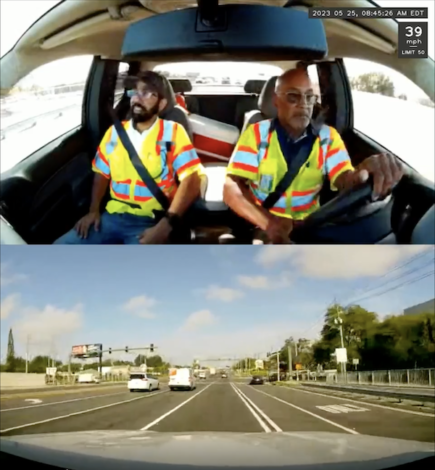
The emergence of artificial intelligence has revolutionized cameras, turning them into proactive safety devices, including AI-augmented dashcams fitted in fleet vehicles, jobsite trucks and equipment cabs. These systems can identify unsafe driving practices, including speeding and abrupt braking; however, their purpose extends beyond merely penalizing individuals. They serve to educate teams by recording moments that can be used for instruction. Consequently, this leads to a reduced likelihood of vehicle-related injuries and may also result in a decrease in costly incidents.
At the worksite, stationary cameras equipped with AI can oversee access points and issue alerts when there is a lapse in compliance. They can also count the number of workers present to confirm that crews are clear prior to the commencement of heavy lifting or demolition operations.
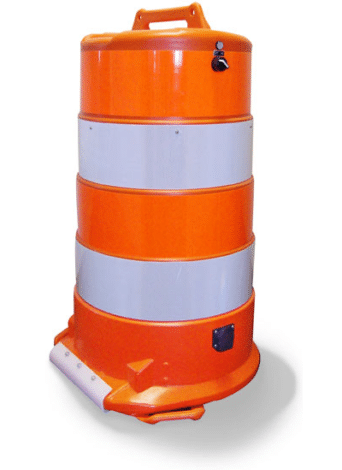
3. Connected Barrels & Barricades
Even the traditional traffic cone is becoming more advanced. Smart traffic devices are now capable of detecting when they have been hit, knocked over or passed at dangerous speeds, and they can report the incident right away.
This data has the capability to initiate alerts for supervisors, activate digital signage upstream or even encourage navigation applications such as Waze and Google Maps to redirect drivers. Consequently, this transforms what was previously a static piece of plastic into an integral component of a dynamic, real-time safety network.
While numerous innovations were initially developed for roadway work zones, their use is now broadening to include utility, industrial and commercial construction projects, as well as any location where vehicle traffic intersects with pedestrian traffic.
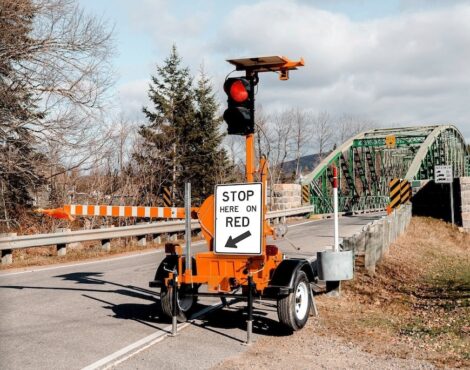
4. Automated Flagging Assistance
One of the riskiest jobs on any construction site is standing in live traffic to direct vehicles. Automated Flagger Assistance Devices (AFADs) take that person out of harm’s way.
These mobile systems oversee stop/slow signaling through highly visible arms and lights, all operated remotely by a crew member situated at a safe distance from potential hazards. The advantages are evident as AFADs do not experience fatigue or distraction and can be utilized around the clock in any weather conditions while keeping workers out of harm’s way.
Missouri DOT research found that motorists are more responsive to AFADs, and 78% of drivers prefer them to human flaggers. That’s a win-win for crews and commuters.
5. Intelligent Systems & Smart Work Zones
Think of an Intelligent Transportation System (ITS) as the “command center” for everything happening around a project site. These systems integrate cones, sensors, radar, cameras and message boards to deliver a real-time, coordinated view of traffic and worker safety.
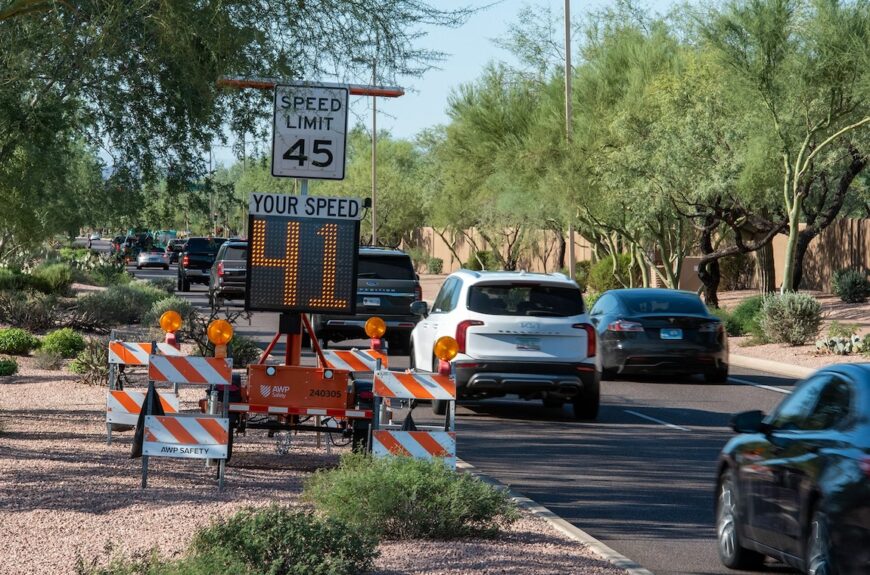
An ITS can monitor the speeds of oncoming vehicles, identify erratic driving behaviors and modify digital signage or dispatch alerts to crews within seconds. Some can even transmit information directly to navigation applications, notifying drivers to reduce their speed before they encounter any traffic cones.
An ITS can also learn traffic patterns and spot near-miss occurrences. This data is collected each day, throughout each shift, to inform decisions related to the positioning of signage, the scheduling of lane closures or the redesign of site access to improve safety, as examples.
6. Cloud Based EHS
The effectiveness of safety data is contingent upon its application, and fortunately, contemporary cloud-based platforms empower EHS teams to gather, assess and respond to safety information more swiftly than ever before. Incident reports, near-miss data, inspections and training records are progressively recorded and disseminated in real time, thereby removing the delay between the occurrence of an event and the implementation of corrective measures.
Using predictive analytics, organizations are further able to identify trends prior to their escalation. For example, if three minor hand injuries take place at a site within one month, the system may indicate systematic causal factors or, simply, a requirement for glove compliance inspections or tool maintenance.
7. Digital Training & Microlearning
Annual, classroom-based training is giving way to bite-sized, on-demand learning delivered via mobile devices. These microlearning modules keep safety top of mind without pulling crews off the job for hours at a time.
Some systems even go so far as to gamify the experience, where workers can earn badges for completing modules on top of simply having more fun while absorbing the content. Other systems push targeted content based on data. For example, if slip-and-fall risks are trending up, then a refresher module can be sent to every crew member’s phone overnight.
8. Telematics Take the Wheel
The primary danger in most work zones and construction sites stems from moving vehicles, and that’s why fleet telematics has become a key part of modern safety programs. By monitoring speed, location, idle time and maintenance schedules, telematics helps organizations keep their vehicles in peak condition while promoting driver responsibility at the same time. Furthermore, they allow dispatchers to reroute trucks when circumstances change and reduce fuel usage as the result of smarter dispatch and response.
9. All Queued Up
Rear-end crashes are one of the most common — and most severe — incidents near work zones. Queue Warning Systems (QWS) use real-time data from sensors to detect when traffic is backing up and instantly push alerts to electronic signs. Drivers get advance notice to slow down or change lanes before reaching the congested area. A study led by the U.S. DOT has shown QWS can reduce the potential for rear-end crashes by 18% to 45% on work zone approaches.
10. AI-Driven Incident Prediction
The future of managing work zones is packed with AI-driven possibilities. The integration of historical crash data, weather condition records and real-time traffic pattern reports, for instance, is facilitating the viability of AI-assisted forecasting. This helps safety and operations professionals predict the location and timing of incidents with the highest likelihood of occurrence.
What that means is that crews can stage equipment, adjust speed limits or stagger work schedules to head off problems before they can materialize. Some state DOTs are already piloting this technology, and as it matures, it will become a tool for private construction projects as well.
The Human Element Still MAtters
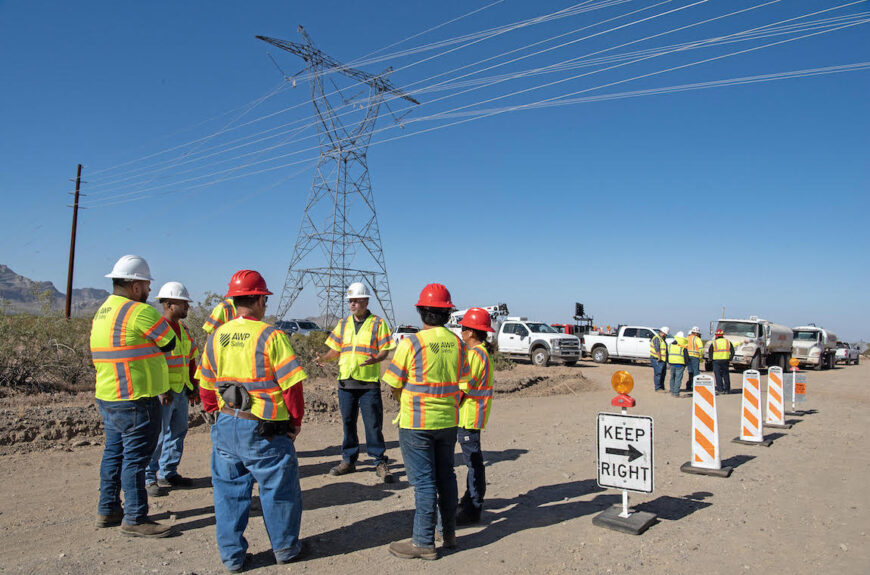
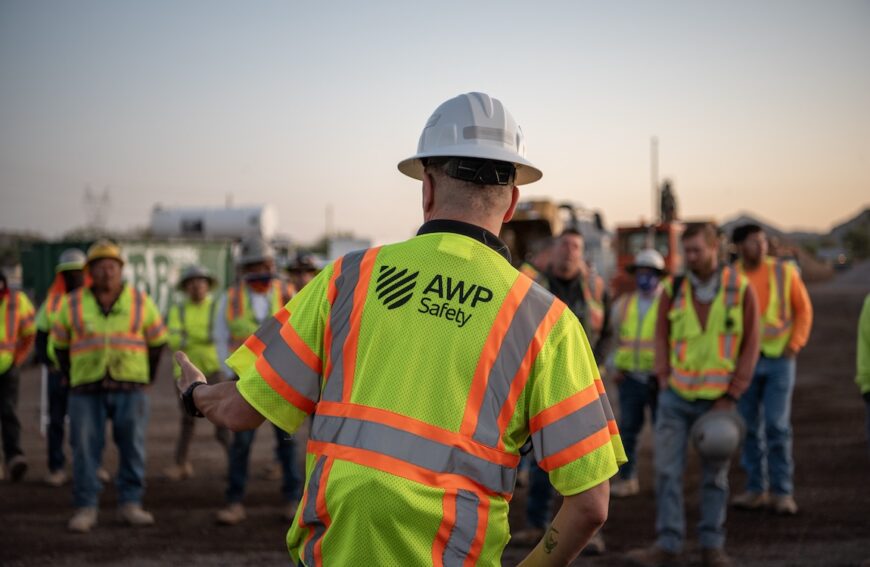
All the technology in the world doesn’t replace the need for a strong safety culture. At AWP Safety, we integrate these tools with jobsite safety briefings, leadership commitments, and a mindset that every incident is one too many.
Because the real power of technology is more than sensors or software. It’s in how technology helps people make better decisions faster, so that they can go home safe at the end of every day.
Construction sites will always be busy places. But they don’t have to be unsafe. The tools exist, the data is here, and the question is: How will we use it?
Connect with your local sales representative to learn how AWP Safety can help make your next work zone safer.