Moving Traffic Control Upstream: A Smarter Approach to Work Zone Safety Planning
Work Zone Safety Planning: Utilities are modernizing the grid while broadband expansion and hyperscale data center development continue to drive infrastructure work across the country. The result is more crews working along roadways, often in complex environments where traffic, schedules and site conditions can change quickly.
The safety risk is significant. The Federal Highway Administration (FHA), using National Highway Traffic Safety Administration (NHTSA) data, reports that in 850 people were killed in U.S. work zones in 2024. More than half of fatal work zone crashes occurred at night, and speeding was a factor in more than one-third. From 2022 through 2024, 53% of road construction worker deaths involved workers on foot struck by vehicles.

Key Takeaways
-
- Bring traffic control into the project earlier. Early involvement gives teams more options to manage safety, permitting, schedules and costs before key conditions are locked in.
- Compliance is the baseline; site conditions shape the right plan. Traffic volume, speed, crash history, weather, seasonality and work type can all change the level of exposure.
- Program-level visibility helps improve consistency and performance. Looking across work zones can reveal recurring hazards, planning gaps and opportunities to improve productivity across regions, crews and contractors.
- Data and AI can help turn field experience into better planning. AWP Safety is using program-level data and beta AI programs to identify patterns in safety, timing and cost that can inform future work.
Q: Tyler, you recently presented at T&D World Live, where utilities leaders were talking about the future of the grid. Why should they be thinking about traffic control as strategic infrastructure that supports grid modernization?
It was great to meet so many leaders from across the utility space. One point I drove home is that traffic control affects safety, permitting, schedules, workforce productivity and project costs.
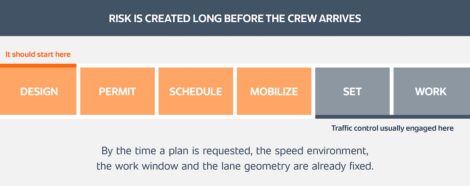
AWP Safety protects more than one million work zones each year, and one pattern we see often is that traffic control enters the process too late. At scale, that creates risk and inconsistency across projects.
Earlier planning gives us time to understand the work, location and conditions crews will face and build traffic control into the project from the start.
Q: A traffic control plan may meet required standards. What else should utilities consider?
Compliance is the baseline. We also need to understand the actual exposure at that site. That means looking at traffic volume, speed, crash history, weather, seasonality and the work being performed, then matching the plan to those conditions.
Florida is a good example. Traffic patterns in the summer can be very different from November through spring break, when seasonal visitors increase traffic. The same location can present a different level of exposure depending on when the work takes place. A compliant plan tells you what is required. Risk-informed planning helps determine whether additional controls make sense for that specific job.
Q: What can a utility see at the program level that it can’t see one work order at a time?
That’s where the data becomes much more powerful.
One intersection may appear on three separate work orders and look routine each time. When we look across the program, we may see that the same location keeps creating problems. We can also identify where setups vary from plans, which controls are being used and where similar issues keep occurring.
For the customer, that creates a much clearer view across regions, crews and contractors. It can help leaders see where practices are inconsistent, where planning may be breaking down and where there are opportunities to improve productivity and reduce last-minute field decisions.
The value is in turning all of that information into better decisions for the next job. Each work zone gives us more insight that can help make the broader program safer, more consistent and more predictable.
Q: Where do AI and automation fit into this approach?
AWP Safety is running beta programs in select markets to see how AI can help us make better use of the data we already collect.
We’re the largest traffic control provider in North America, so at our scale we have a lot of information about how work is actually performed. We can look at how quickly certain crews complete specific work, how long similar projects take, what traffic control has historically cost and where risk tends to concentrate.
I see the opportunity in connecting those insights. We can use what happened in the field to help customers plan the next job with better information about safety, timing and cost.
Q: What do you want utility leaders to think differently about when it comes to traffic control?
At T&D World, one attendee asked a great question: When is a standard traffic control approach enough, and when does a job need a more detailed, site-specific plan?
That gets to the heart of this issue. My advice is to make that decision early, with the right people involved and the right information in front of you.
Ask what risk is driving the plan, along with what it costs. And bring traffic control into the design conversation while there is still time to change the conditions crews will face. That is where we have the greatest opportunity to reduce exposure before anyone enters the work zone.
Learn more about planning and reducing risk. AWP Safety’s webinar, “Safety Readiness for Changing Work Zones” provides practical guidance on recognizing risk earlier and responding as field conditions change.