Distracted Driving Doesn’t Have an Age Limit

Michelle Marsh, AWP Safety’s senior vice president of EHS, leads the company’s EHS program and advances safety culture through technology and data analytics. Michelle’s article below was also featured in Roads & Bridges during National Work Zone Awareness week.
Distracted driving is usually talked about like a “young driver” issue or, depending on who’s telling the story, an “older driver” issue. But when you look closer at crash reporting and listen to what observers see on the road, that storyline falls apart, because distraction is a behavior that cuts across age, experience and routine—a reality worth underscoring during National Work Zone Awareness Week 2026.
A “distraction-affected crash” is simply one where investigators determine the driver was distracted at the time of the crash, and the consequences aren’t theoretical. The National Highway Traffic Safety Administration (NHTSA) reports distracted driving claimed 3,275 lives in 2023.
Texting is singled out as especially dangerous because it pulls your eyes off the road—NHTSA notes that reading or sending a text takes about 5 seconds, which at 55mph is like traveling the length of a football field “with your eyes closed.” And that risk doesn’t belong to just one generation.
Fatal crash involvement shows distraction across adult ages
NHTSA’s research makes the “it’s just young drivers” (or “it’s just older drivers”) story hard to defend once you see the distribution.
Across all drivers involved in fatal traffic crashes in 2023, 5% were reported as distracted. And when you look by age, the pattern is a spread with the highest share among 15–20-year-old drivers (7%), but the next three adult bands—21–24, 25–34 and 35–44—are each at 6%. From there, distraction settles into a steady baseline: 45–54, 55–64, 65–74 and 75+ are each at 5%.
Yes—newer drivers show up slightly higher. But the bigger takeaway is that distraction is present in every adult age band involved in fatal crashes. It’s a behavior that follows people into the car regardless of age.
Phone use
Distraction is broader than phones, but phones are one of the few behaviors we can observe at scale. In its National Occupant Protection Use Survey (NOPUS), NHTSA reported that 2.1% of passenger-vehicle drivers were holding phones to their ears in 2023. NHTSA also observed 0.5% of drivers speaking with visible headsets and 3.0% visibly manipulating handheld devices (for example, interacting with a phone/tablet) during an average daylight moment.
Because NOPUS captures observed handheld behaviors, NHTSA also provides a broader estimate of total phone use, estimating that 6.4% of drivers were using some type of phone (handheld or hands-free) during a typical daylight moment in 2023.
And older drivers aren’t “exempt” even if their observed rates are lower. NHTSA observed 0.7% of drivers age 70+ holding phones to their ears and 0.6% visibly manipulating devices.
Work Zones Raise the Cost of Distraction
Work zones compress space and time as lanes shift, sightlines tighten and the “normal” rhythm of the road disappears. That means there’s less room for recovery if a driver drifts, and fewer safe options for crews when a vehicle enters the workspace.
For the crews building and operating the work zone, the goal is to assume distraction will happen and design for it:
- Build the zone correctly, every time: advance warning, transition area, buffer, workspace and termination.
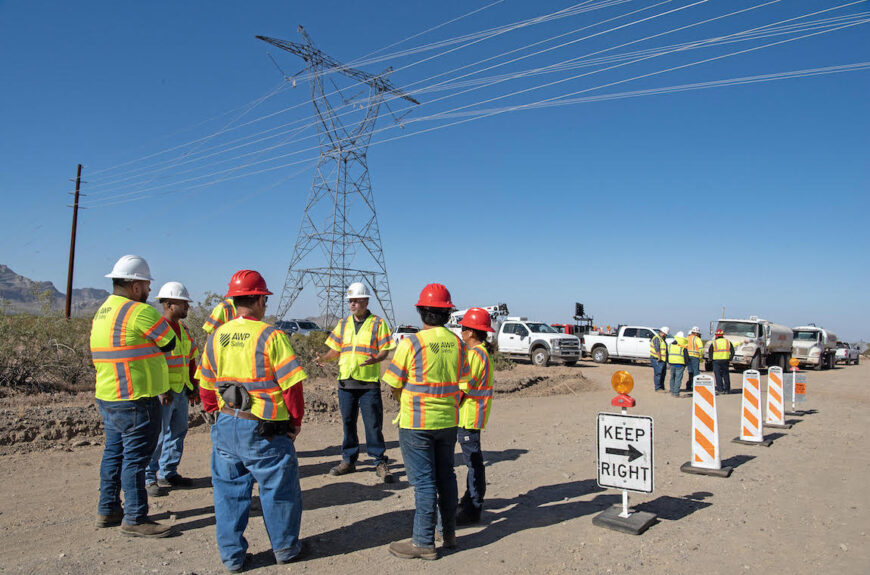
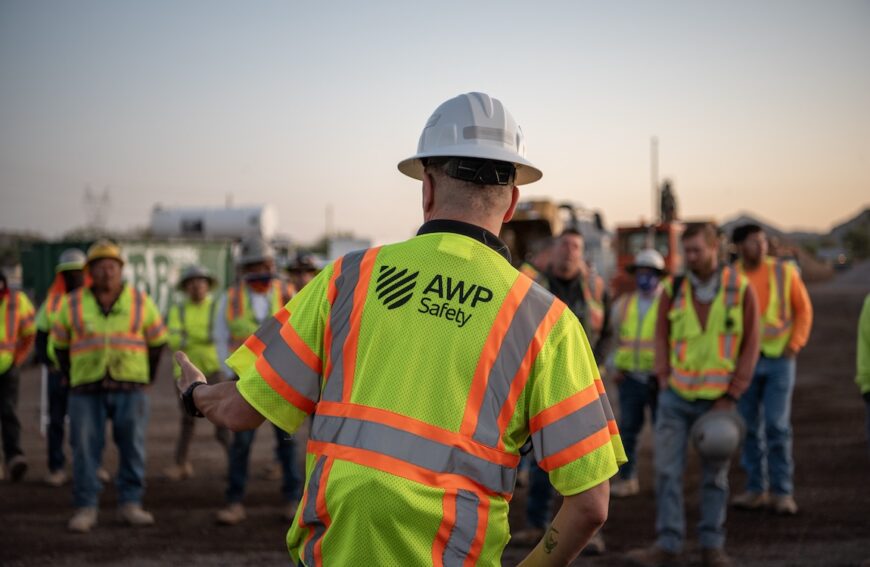
- Treat the pre-job safety briefing as the first control: identify the hazards you expect (speed, queues, sightline issues, access points), then assign who is watching traffic and who is protected.
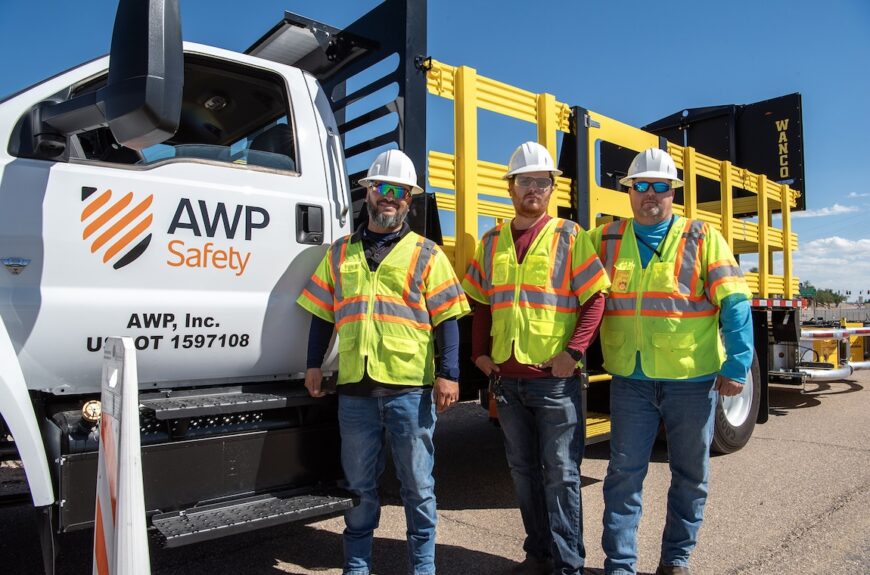
- Reinforce AWP Safety’s “cardinal” approach: hazard assessment, proper traffic control PPE and a qualified traffic observer. Early detection and disciplined setups are the key to work zone safety.
The point is to acknowledge what the data keeps showing: that distraction is everywhere. The safest work zones are the ones planned and operated with that reality in mind, so the system can hold even when attention fails.
Reduce risk before the first cone goes down—AWP Safety offers job-specific work zone planning and support. Contact your local AWP Safety expert.