Workplace Injuries: Building Safer Habits to Reduce Slips, Trips and Falls
In safety-sensitive work environments, some hazards are easy to recognize. Traffic, equipment, weather and changing jobsite conditions all demand attention. However, everyday hazards can seem routine until they lead to serious consequences. A wet floor, uneven pavement, loose material, icy conditions, curbs, guardrails or the back of a truck can quickly become the cause of an injury.
At AWP Safety, crews often work in outdoor, mobile environments where conditions can change throughout the day. A jobsite may shift from one location to another. Weather can create new hazards. Crews may be loading or unloading trucks before heading into the field. Each of those moments requires attention, communication and a plan.

“Slips, trips and falls are a leading cause of workplace injuries, and they are also one of the areas where awareness and planning can make a real difference,” said Megan LaRoche, Senior Manager, EHS Compliance at AWP Safety.
Key Takeaways
-
- Slips, trips and falls can happen in any workplace, including jobsites, yards, facilities, offices and outdoor environments.
- Proactive hazard identification should be part of every pre-job briefing and daily safety conversation.
- Common prevention steps include maintaining three points of contact, wearing proper footwear, keeping walkways clear and planning for weather.
- Sharing incidents and lessons learned helps turn individual events into organization-wide safety improvements.
Why Everyday Hazards Deserve ATtention
Slips, trips and falls can happen in nearly any workplace, from a field jobsite to a warehouse, office, parking lot or yard. In traffic control and infrastructure work, the risk is especially important because employees are often moving through active environments while carrying equipment, watching traffic patterns and coordinating with others on site.
The injuries can also be more serious than people expect. A fall may lead to a sprain, broken bone or other injury that keeps an employee away from work for weeks or months, affecting the employee, their family, their crew and the organization.
“The goal is to create the safest environment possible, free from incidents,” LaRoche said. “But to get there, we have to identify hazards early and build habits that help prevent incidents before they occur.”
Planning for Changing Conditions
One of the most effective ways to reduce slip, trip and fall risks is through consistent pre-job planning. Before work begins, teams should look closely at the environment around them and talk through the hazards they see.
“Awareness matters,” LaRoche said. “When people understand where these hazards show up and talk about them before the work starts, they are better prepared to avoid them.”
That includes uneven ground, potholes, curbs, slopes, standing water, ice, mud, poor lighting, clutter, equipment placement and safe access to trucks or work areas. It also includes reinforcing basic practices, such as maintaining three points of contact when climbing in or out of equipment or truck beds.
For companies looking to improve prevention, LaRoche recommends making hazard identification part of the daily routine. Training should be practical, consistent and relevant to the work environment. A team in a northern climate may need reminders about ice, snow and traction aids, while a team in another region may need to prepare for rain, mud or seasonal storms.
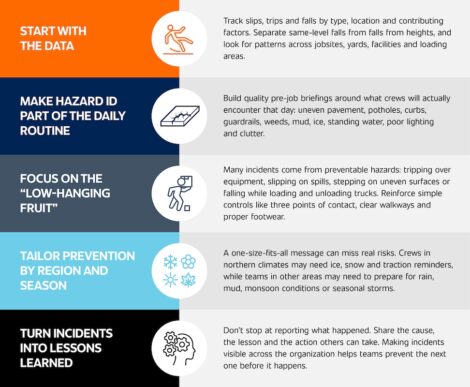
5 Things EHS Professionals Should Consider to Improve Slips, Trips & Falls Metrics
- Start with the data – Track slips, trips and falls by type, location and contributing factors. Separate same-level falls from falls from heights, and look for patterns across jobsites, yards, facilities and loading areas.
- Make hazard ID part of the daily routine – Build quality pre-job briefings around what crews will actually encounter that day: uneven pavement, potholes, curbs, guardrails, weeds, mud, ice, standing water, poor lighting and clutter.
- Focus on the “low-hanging fruit” – Many incidents come from preventable hazards: tripping over equipment, slipping on spills, stepping on uneven surfaces or falling while loading and unloading trucks. Reinforce simple controls like three points of contact, clear walkways and proper footwear.
- Tailor prevention by region and season – A one-size-fits-all message can miss real risks. Crews in northern climates may need ice, snow and traction reminders, while teams in other areas may need to prepare for rain, mud, monsoon conditions or seasonal storms.
- Turn incidents into lessons learned – Don’t stop at reporting what happened. Share the cause, the lesson and the action others can take. Making incidents visible across the organization helps teams prevent the next one before it happens.
Turning Lessons into Safer Habits
Prevention also depends on how organizations respond when incidents occur. Tracking injuries helps safety teams identify trends, but the greater value comes from sharing what was learned and helping others apply those lessons.
Safety conversations should include real examples from across the organization so teams can understand what happened, why it happened and how similar incidents can be prevented. Even when a specific scenario does not apply to every crew, the lesson often does.
Reducing slips, trips and falls also requires a culture where employees are encouraged to slow down, speak up and take hazard identification seriously. Leaders play an important role by reinforcing expectations, making safety resources visible and treating prevention as a shared responsibility.
“When we talk about incidents, share lessons learned and keep safety visible, we build a proactive culture, and that commitment from leaders and crews is what helps people go home safely,” LaRoche said.
Slips, trips and falls may be common, but they are preventable. With practical training, jobsite awareness and proactive planning, organizations can reduce injuries and create safer, healthier workplaces for everyone.
Learn more from AWP Safety about Why Safety Culture is an Operational Advantage.