Underground Construction: The Hidden Costs of Reactive Traffic Control

Michelle Marsh, AWP Safety’s senior vice president of EHS, leads environmental, health and safety strategy across the company’s field operations. With more than 25 years of EHS leadership experience, she focuses on building safety systems that help frontline teams recognize risk. In her recent article, shared by Underground Infrastructure, Michelle explains the costs of reactive traffic control.
Underground construction is under pressure from two directions at once. Contractors are trying to do more with limited labor, while owners are trying to move funded infrastructure programs faster. Fiber networks, water and wastewater upgrades, gas distribution work, electric infrastructure and many underground projects depend on steady field production. The more predictable the workday, the easier it is for crews to stay productive, hit milestones and avoid rework.
And here is where traffic coordination has become more of a problem. Traffic control is still largely perceived as a support function that gets addressed after the construction plan is settled in place for so many projects. But in the field, traffic coordination can help determine if a crew starts on time, whether equipment can access the site, if access is then maintained, if a permit is approved, and whether work can be completed in the window of time permitted.
Traffic planning that is late is not always apparent at first sight. It’s in the little problems that compound: a crew sidelined due to a lack of permit package, a lane closure window that does not conform to the production sequence or a work zone that is changed because of the staging plan that doesn’t really match the street.
Labor Shortages
Underground contractors are already dealing with labor shortages. Experienced foremen, equipment operators, laborers, locators, restoration crews and traffic control personnel are not always easy to add at the last minute.
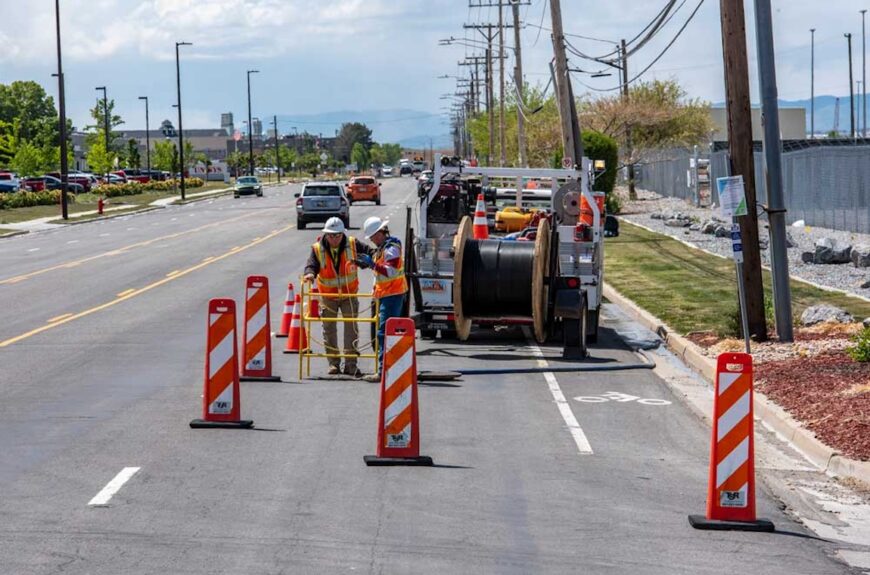
When traffic coordination is not in line with the work plan, a directional drilling crew might be ready to start, but the lane closure does not leave enough space for the drill, support truck, reel trailer and spoil management. A utility crew might be scheduled for a service connection, but the parking restrictions were not posted early enough to clear the curb lane. A repair crew may have the labor and equipment ready, but the approved work hours do not give enough time for setup, excavation, inspection, backfill and restoration.
The point is that traffic coordination should be planned with the same attention as labor and equipment because it is part of making the crew productive.
Before the work is scheduled, teams should know if the traffic setup supports the actual construction method. That means knowing where trucks will stage, where equipment will swing or load, how materials will be delivered, how workers will enter and exit, what pedestrian access should be kept and how long the usable work window really is after setup and breakdown. A six-hour permit window is not six hours of production if one hour is needed to install the setup and another is needed to reopen the lane.
Funding Rush
Public funding, private investment and utility modernization programs have created a strong push to move projects faster from planning to construction, and from construction to closeout.
That pressure is especially evident in fiber and utility buildouts, where progress is often measured by repeatable production across many locations. Just one delayed area may not look big, but repeated traffic-related issues can push back bigger milestones.
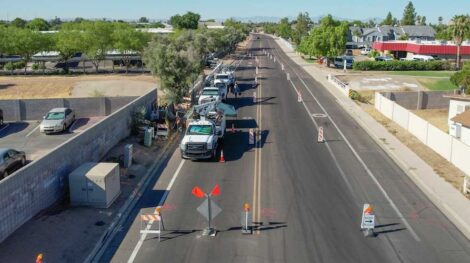
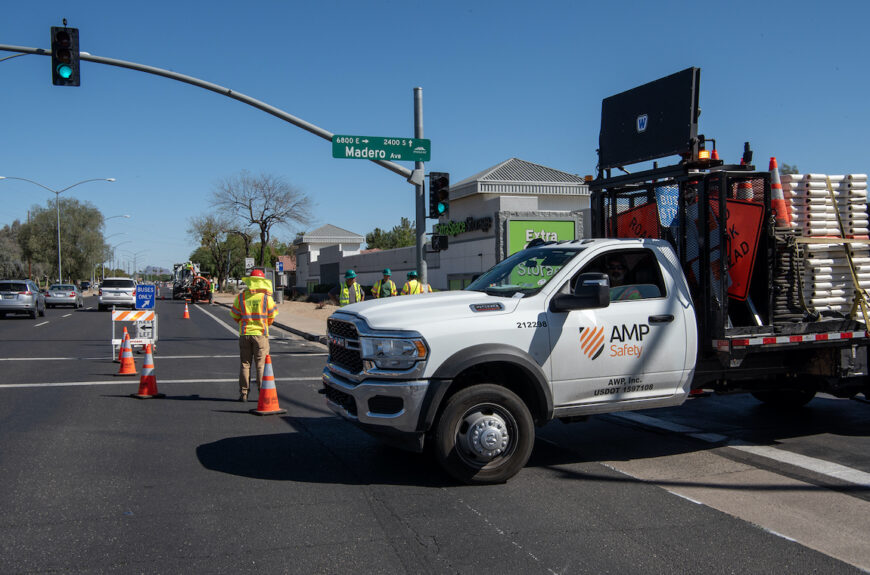
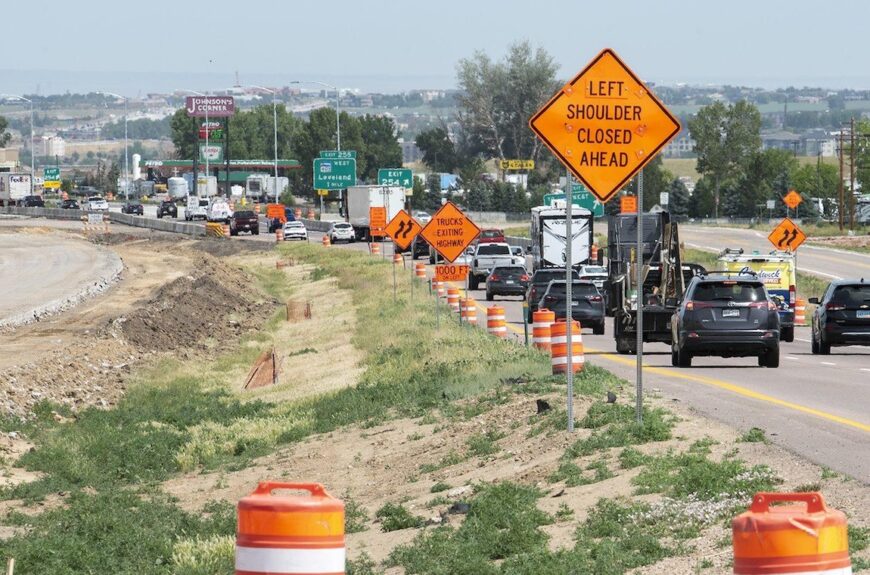
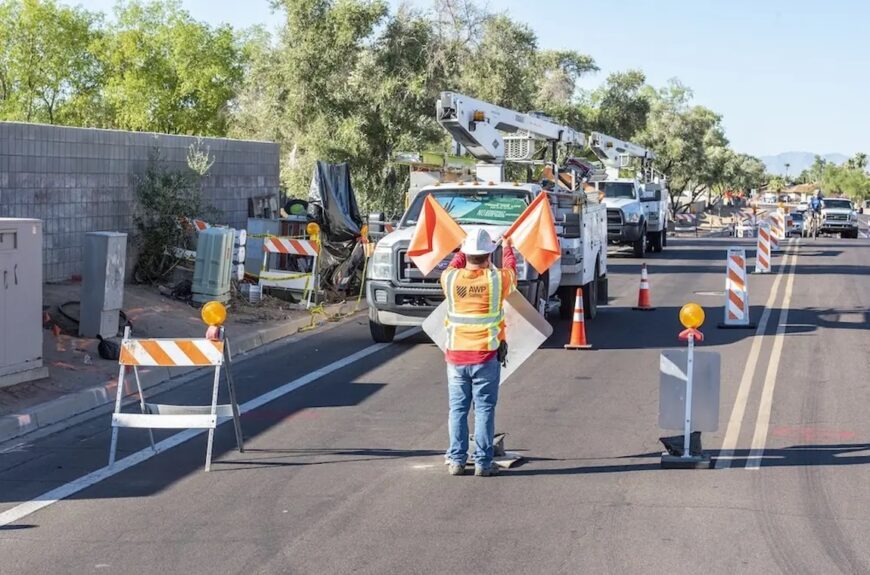
Lane controls, staged equipment and visible pedestrian guidance can give crews room to operate while keeping drivers, residents and businesses moving safely through the work zone.
A permit may be delayed if there is no traffic plan in place. If the lane closure is not approved for the requested hours, the work sequence may need to change. If a municipality requires a different pedestrian route, notification process or detour, the contractor may need to revise the plan and resubmit it. If field conditions force a change that was not anticipated, the team may need additional approvals before work can proceed.
Each step adds time and costs money through change orders, additional mobilizations, standby time or extended project timelines.
Municipal Permitting
Underground construction work typically traverses several jurisdictions, and each may have different expectations. The fiber program might touch residential neighborhoods, downtown streets, arterial roads and DOT-controlled routes. A water or sewer project may have longer work zones, deeper excavations, steel plates, bypass pumping, trench protection or larger equipment. Gas and electric utility work may also involve emergency access issues, lane restrictions and coordination with other activities.
A traffic control plan that is technically drawn but disconnected from the actual construction sequence can create problems during review. Municipalities and agencies need to know how the work will affect traffic, pedestrians, driveways, businesses, transit, emergency access and the public right-of-way. Without such specificity, reviewers may come back with questions or conditions that delay approval.
A stronger permit package should make the work easier to understand; it should:
- Convey more than the lane closure pattern
- Explain the work limits, timing, staging approach, pedestrian route, access plan, detour needs, device layout and restoration expectations
- Account for other realities that can cause friction in the field; e.g., a bus stop inside the work area, a business entrance that can’t be blocked, a narrow shoulder that limits equipment staging, a school arrival window, a delivery alley
This does not mean every job needs a complicated planning process, but the plan should match the risk and complexity of the work. A short-duration maintenance task may need a standard setup and a clear checklist, while a multi-block utility replacement or fiber buildout may need a deeper coordination process, especially if conditions will change from one segment to the next.
Handoff Problems
The estimating team could assume one type of setup. The permit team may submit a plan based on that assumption. The contractor might change the work sequence later. The municipality can add a condition. The field crew may receive the work order without the latest permit note. When the crew arrives, the plan may still exist, but the assumptions that it was based on are no longer present.
The contractor, traffic control partner, municipality and field team do not need to know every project detail, but they do need a shared understanding of what affects execution. A clear start package can bring those details together and should include:
- Approved traffic control plan, including the planned closure, device layout, taper lengths, buffer areas, and required pedestrian routing
- Permit conditions, including municipality-specific requirements, inspection expectations and any restrictions tied to the approval
- Authorized work window, including setup and removal times, allowable closure hours and any blackout periods
- A complete device list, including quantities, types, spacing requirements and any specialized equipment such as arrow boards or temporary signals
- Staging notes, including where trucks, equipment and materials can be positioned without blocking traffic, driveways or emergency access
- Access requirements, including entrances, sidewalks, transit stops and routes that must remain open for residents, businesses, pedestrians and emergency responders
- Key contacts and the escalation path, so crews know who to call about permit questions, field conflicts, inspection issues or changes that require approval
Organizing before mobilizing gives the field team a plan it can execute and creates a clear checkpoint for resolving conflicts before setup begins, rather than forcing crews to interpret missing or outdated information next to live traffic.
Conclusion
Underground construction will always involve unknowns, but better coordination can remove avoidable uncertainty. With limited labor, tighter schedules and more complex requirements, the projects that move best will connect traffic planning, permitting and field execution before the crew arrives.