The Risks of Night Work

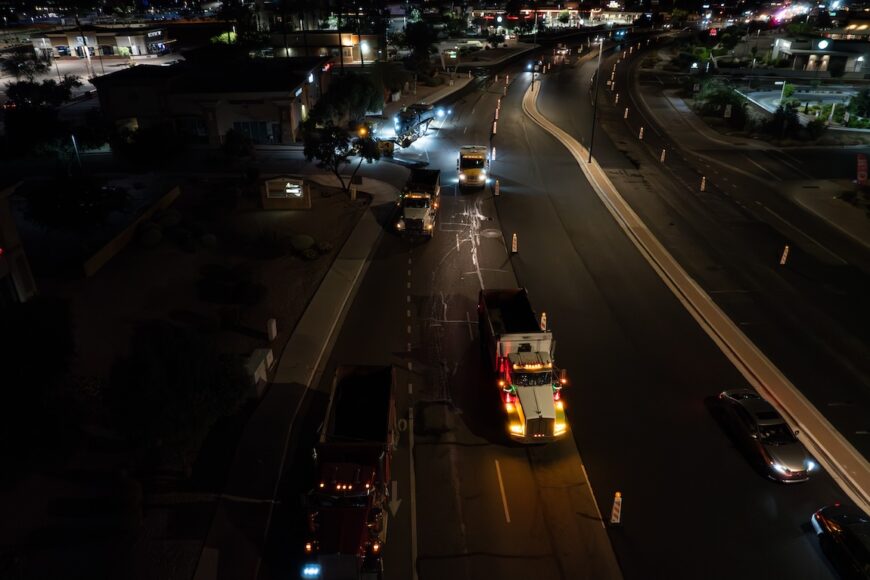
Night work can feel calmer because traffic volumes often drop and the work zone can look contained under artificial light, so why does it still demand tighter safety discipline? Because darkness compresses the margin for error, and it can hide hazards that daylight makes obvious. That’s why it’s wise to treat National Work Zone Awareness Week 2026 as a checkpoint to verify the plan, the lighting and the discipline.
A compliant work zone is built to guide drivers step by step: advance warning, transition, buffer space, workspace and termination. At night, those zones still do the same job, but drivers have fewer cues to process them.
The buffer space is the clearest example. It exists as recovery space for an errant vehicle and must stay empty. Do not stand in it, do not park in it, do not store equipment or material in it. Night work can create “false confidence” where people drift closer to traffic because it feels quiet.
The buffer space rule does not change with traffic volume.
Visibility
Night visibility is also about workers seeing trip hazards, edges and moving equipment. Poor lighting is a common cause of slips, trips and falls, so walkways and work areas must have enough light to reveal uneven surfaces, clutter, cords and changes in elevation. If lighting is uneven, shadows can mask holes and obstacles, and glare can be just as dangerous as it washes out contrast and makes it harder to judge distance.
As a practical rule, light the path first (access routes, step-offs and the edges of the workspace) then angle fixtures downward and away from driver sightlines to reduce backlighting and glare while maintaining consistent coverage across the walking surface, per your Traffic Control Plan (TCP).
Fatigue raises risk
Night operations can push crews into long shifts and split sleep. Treat fatigue as impairment, meaning if someone is not fit to drive or operate equipment safely, or to conduct flagging or site supervision duties, then the plan needs to change before the first vehicle moves.
Struck-by prevention tightens at night, too. Controls should be simple, repeatable and enforced every shift: wear high-visibility clothing that stays visible in changing lighting, follow the TCP and make eye contact with operators before approaching equipment. At all times, keep work areas clear so people aren’t forced into unsafe paths to get around materials.
Four Checks Before the Shift Starts:
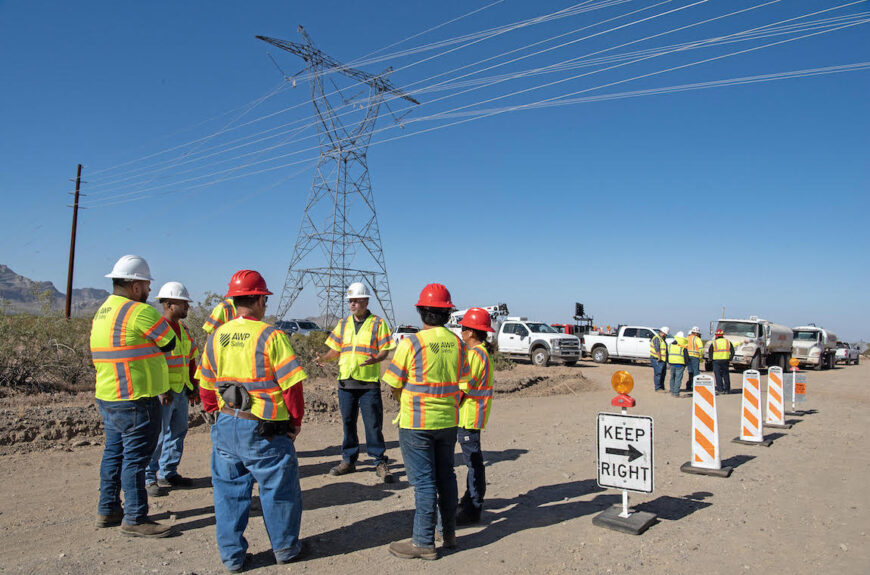
- Review the site, confirming where the taper starts, buffer length and proper device spacing (e.g., properly placed cones, signs and/or barricades per the TCP).
- Validate lighting on walking paths and access routes (not just on the work task).
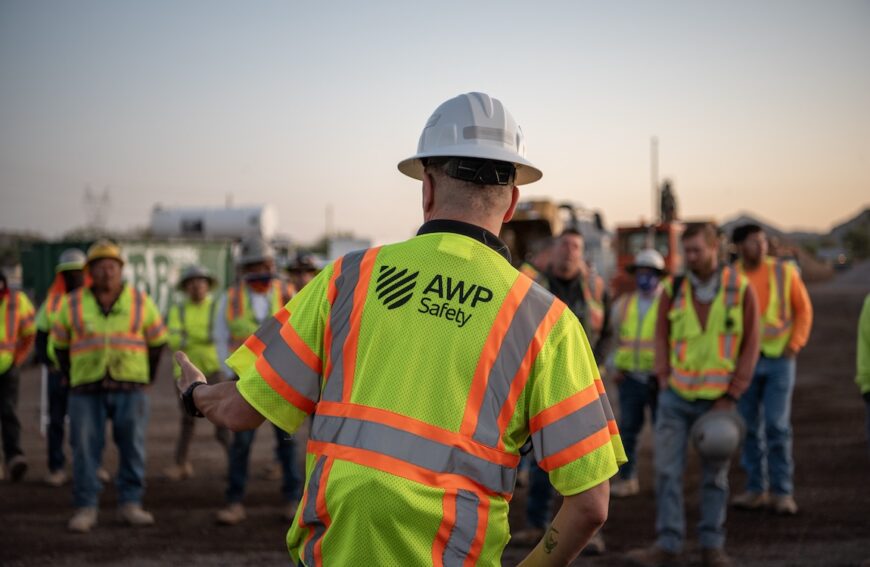
- Rehearse the struck-by basics in a pre-job safety briefing: visibility, equipment awareness, eye contact and a clean workspace.
- Put fatigue on the hazard list and act on it: rotate high-focus tasks, schedule breaks and relieve impaired operators from duty at the first sign of fatigue.
Night work goes smoothly when work zone basics stay strong. The key to safe, predictable shifts is to not let “the calm” dilute your discipline.
For project-specific work zone planning and support, contact your local AWP Safety expert.